Navigating India’s business culture: practical insights for leaders

India ranks as one of the world’s top four economies by nominal GDP, with IMF data showing India edging past Japan on current‑price GDP in the April 2025 World Economic Outlook. IMF projections indicate real GDP growth near 6%, keeping the economy among the world’s top performers. To unlock opportunities in India’s expanding supply chains, advanced capital markets and rapidly digitising consumer base, global organisations need to develop a keen understanding of India’s business norms and cultural nuances.
India is a richly diverse, multilingual and multi-ethnic society with distinct cultural differences between the northern and southern regions. In business, trust and long-term relationships form the bedrock of successful partnerships.
Understanding the values and beliefs that shape workplace dynamics is essential for achieving sustainable success. To that end, we’ve compiled a list of six practical tips to help you confidently navigate the business culture in India.
1. Trust and hierarchy: how decisions are made
When doing business in India, success often hinges on building strong personal connections. Trust is a critical currency, and cultivating relationships with key stakeholders is essential for long-term growth. Networking opportunities and consistent communication are vital in strengthening these ties.
Indian companies generally operate within a clear hierarchical framework, where major decisions rest with senior leadership. Respect for authority is deeply embedded in the culture. Navigating this structure effectively is key to ensuring smooth communication and driving decisions forward.
Here are three practical steps to keep decisions moving:
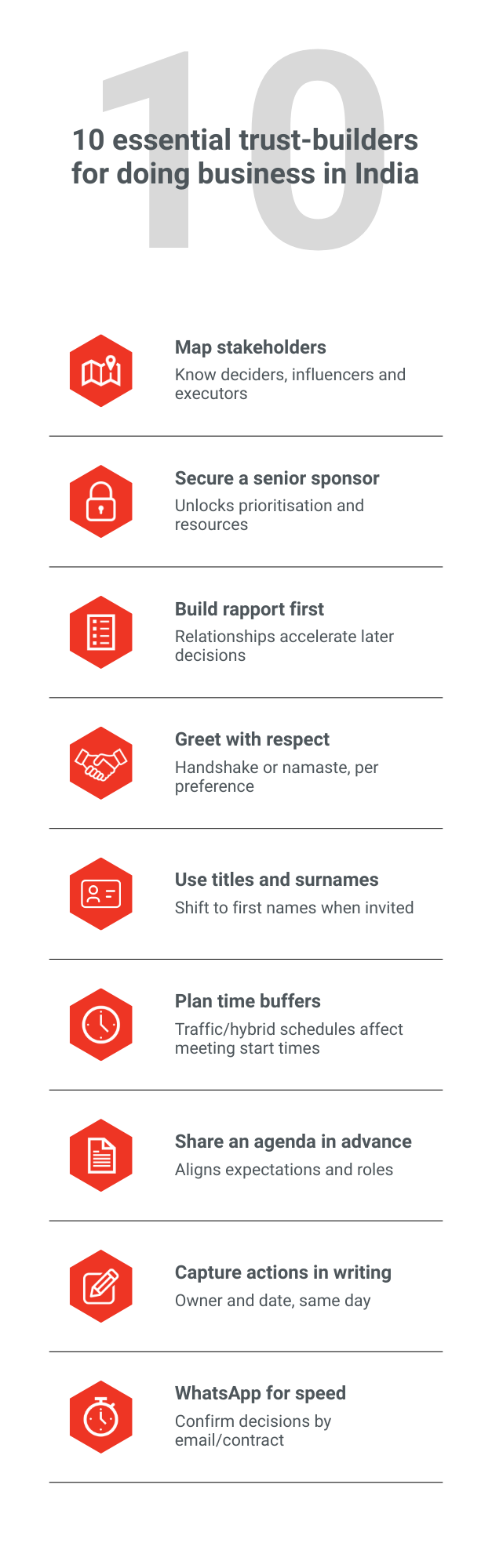
- Map stakeholders (deciders, influencers, executors)
Start by identifying who truly drives decisions, who influences them and who will execute once approvals are in place. This prevents pitching at the wrong level and ensures you know exactly who needs to be aligned before anything gets approved. - Secure a senior sponsor
A senior sponsor within the organisation can be a game-changer. They help unblock resources, surface potential concerns early and bring cross-functional teams into alignment – critical for keeping momentum and avoiding bottlenecks. - Confirm owners and deadlines in writing
Verbal agreements are a good start, but written commitments turn goodwill into action. Documenting responsibilities and timelines gives teams the confidence they need to move forward without hesitation.
2. Communication that lands: turning a soft “no” into progress
In India, direct refusals are often avoided to maintain harmony. Instead, you may hear phrases like “We’ll try,” “It may be difficult,” or notice long pauses, topic changes or repeated deferrals. These are subtle signals that the answer is leaning towards “No”.
To move things forward, use this three-step conversion framework:
- Clarify the constraint
Pinpoint what’s holding things back – is it time, scope, budget or perceived risk? Asking open questions helps uncover the real obstacle. - Offer a calibrated option
Propose an alternative that feels manageable: a smaller scope, a pilot project or a phased timeline. This reduces risk and makes agreement more likely. - Lock in next steps
Confirm the task owner and timelines before you wrap up and follow up in writing to turn intent into action.
3. Meetings and etiquette that reduce friction
Small behaviours can make a big difference in India. Simple gestures – like greetings, respectful forms of address and planning buffers – help lower social risk and set the tone for smooth collaboration from the very first interaction. In a culture that values respect and harmony, these details signal professionalism and build trust quickly.
Follow these practical guidelines for navigating meetings in India:
- Start with the right greeting
A handshake is common in business settings, but a polite namaste is equally appropriate and often appreciated. - Use titles and surnames
Address people formally, using titles and surnames, until invited to do otherwise. Safe small talk topics include work, travel and festivals; avoid politics or personal matters. - Build in time buffers
Traffic and hybrid schedules can cause delays. Allow extra time between meetings and share an agenda in advance to keep discussions focussed and productive. - Close with written action items
End every meeting by summarising next steps in writing – include owners and deadlines. This turns verbal agreements into clear commitments.
4. Balancing speed and governance in digital channels
In India, many teams rely on WhatsApp for quick coordination because it’s fast, familiar and widely used. While this can accelerate communication, it’s important to balance speed with governance and compliance.
Here’s how to make it work without compromising professionalism:
- Agree on the channel upfront
Set clear expectations for how WhatsApp will be used – this prevents confusion and ensures accountability. - Keep sensitive information out of chats
Never share personal data, confidential documents or price-sensitive details on WhatsApp. - Summarise decisions via email or contract
WhatsApp is great for quick discussions, but it’s not a substitute for formal documentation. Always confirm decisions, timelines and responsibilities in writing – either by email or in official contracts to ensure auditability.
5. Gifts, hospitality and ethics: keep it simple
In India, gestures of goodwill – such as small gifts or hospitality – are common in business, but they must be handled carefully to avoid ethical pitfalls.
Here are some guiding principles to bear in mind:
- Set clear guidelines first
Define what types of gifts, hospitality or gestures are acceptable. - Never engage in quid pro quo
Gifts or hospitality should never be tied to business decisions or approvals – transparency is essential to avoid conflicts of interest. - Document everything
Keep gestures modest and record what you give or receive – this ensures compliance and provides an audit trail. - When in doubt, decline politely
If you’re unsure whether something crosses a line, err on the side of caution. A courteous refusal and reference to your compliance policy shows professionalism and integrity.
6. Understanding business dress codes in India
First impressions matter, and, in India, professional attire signals respect and credibility. Aim for smart, climate-appropriate business wear that balances formality with comfort.
In finance, legal and government sectors, formal suits and ties remain the standard for men. Women should opt for conservative dresses or trouser suits.
When meeting someone for the first time, err slightly on the formal side, then calibrate based on the organisation’s culture and your counterpart’s style.
Key takeaways
- India is a multilingual, multi-ethnic society with significant cultural differences between regions
- Trust and long-term partnerships are essential for successful business dealings
- Respect for hierarchy, relationship-building and cultural sensitivity play a major role in workplace dynamics
- Organisations value seniority and consensus, so allow time for approvals and respect the chain of command
- Familiarise yourself with local customs and etiquette to build stronger connections
How TMF Group can help
With dedicated teams across India, TMF Group supports multinationals in entering, operating and staying fully compliant in this dynamic jurisdiction. Our services span the entire business lifecycle – from entity establishment and governance (Global Entity Management and Corporate Services) to Accounting and Tax and HR and Payroll. Speak to our India experts for tailored solutions aligned to your business’s needs.
Find out more about India’s business landscape – download the country profile for key insights, regulatory requirements and compliance essentials.
Request now Request now