Doing business in Singapore
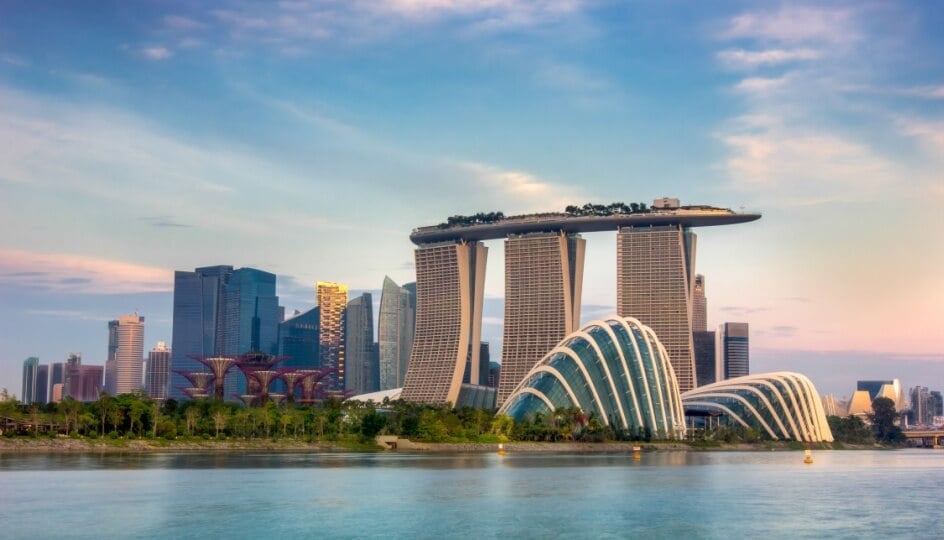
Nicknamed the “Lion City”, Singapore’s rich cultural heritage, robust economy and world-class infrastructure make it an especially attractive option for foreign investors. The key to success in this vibrant jurisdiction is a deep understanding of how cultural nuances shape the business environment.
Singapore, officially the Republic of Singapore, is an island city-state located in Southeast Asia, north of the equator and close to the southern tip of the Malay Peninsula. It is separated from Indonesia by the Singapore Strait and from Malaysia by the Straits of Johor.
Spanning an area of just 734.3 square kilometres and home to around six million people, Singapore is the third most densely populated country in the world.
Despite its size, Singapore boasts a robust and stable economy that is underpinned by a thriving financial services sector and a strong focus on value-added manufacturing.
Singapore is a member of several international trade alliances, including the World Trade Organization (WTO), Asia-Pacific Economic Cooperation (APEC) and the Association of Southeast Asian Nations (ASEAN).
With its world-class infrastructure and investor-friendly environment, Singapore is seen as an attractive location in which to do business.
In TMF Group’s Global Business Complexity Index (GBCI) 2026, Singapore ranked as the world’s 47th most complex jurisdiction, and is considered one of the simplest jurisdictions for doing business in Asia Pacific. However, doing business in Singapore is not without its challenges, which include rising business costs, labour shortages and strict adherence to regulatory compliance.
| Fast facts: |
|
Advantages of doing business in Singapore
As a global financial hub, and gateway to major Asian markets such as China and India, Singapore is a popular destination for multinational companies as well as startups. A strong economy, competitive tax rates and stable regulatory environment are just some of the reasons why investors view Singapore as a springboard into the wider Asia Pacific region.
The main benefits of doing business in Singapore include:
A skilled workforce
Singapore offers a diverse talent pool and highly educated workforce. Most workers are proficient in English and at least one other official language, such as Mandarin, Malay or Tamil.
A good quality of life
Singapore boasts world-class education, healthcare and public services. The comparative ease of expatriate integration makes it easier to attract global talent and Singapore is also considered one of the safest countries in the world.
World-class infrastructure
Singapore’s unrivalled infrastructure includes an efficient and modern transportation network and advanced telecommunications systems. The country is also recognised as a leader in global connectivity.
Transparent business environment
Singapore is one of the least corrupt countries in the world and its government is a keen proponent of business transparency.
Business-friendly tax regime
The country offers a competitive corporate tax rate, no capital gains tax and, generally, no dividends tax.
Stable political environment
Singapore’s stable socio-political environment coupled with its “aggressive neutrality” stance make it an attractive choice for international investors.
The business culture in Singapore
Singapore is a multicultural society comprising Chinese, Malay, Indian and Eurasian communities. There are four official languages: English, Mandarin, Malay and Tamil, with English being the most commonly used language for everyday business. This cultural medley influences all aspects of Singaporean life, including business etiquette.
The Singaporean business culture is formal and conservative, and punctuality is of utmost importance. Singaporeans are known for their strong work ethic and their commitment to excellence and professionalism. Organisations are generally hierarchical in nature and there are clear lines of authority.
Relationship-building is a crucial element of doing business in Singapore – developing a rapport may take some time but it is well worth the effort, as the quality of the relationship often determines the business outcome. Singaporeans value collaboration and will usually consult with colleagues before making decisions, particularly in larger organisations.
Dos and don’ts
Understanding and respecting cultural differences is vital when doing business in Singapore; here are some dos and don’ts to help guide your business interactions:
Communication
Always be polite and respectful when engaging with Singaporeans. Speak in a low tone and avoid confrontational or aggressive behaviour. Don’t interrupt your business partners while they are speaking and be sure to listen attentively.
Meeting etiquette
Always be on time for meetings and address your business partners by their first and last name. Business cards are usually exchanged after the initial introduction; use both hands to receive or present business cards. After receiving a business card, take a moment to study it and then place it on the table face up or put it in a card case. Don’t write on a business card or put it in your back pocket.
Once your presentation is over, encourage your business partners to ask questions – avoid disagreeing with or criticising anyone senior to you. Exercise patience during the negotiation process and don’t lose your temper. Avoid pointing and gesturing during the meeting.
You may present your business partners with small gifts, but large gifts could be constituted as bribery. Meetings can be conducted over meals but be sure to ask about dietary requirements before selecting a venue.
Taxes and regulations in Singapore
Singapore has a territorial tax system, with taxes administered by the Inland Revenue Authority of Singapore (IRAS). Tax incentives have been introduced to encourage new and high-growth activities.
The corporate income tax rate is 17% and companies are taxed on the income earned in the preceding financial year. The startup tax incentive scheme offers newly incorporated companies some exemptions on taxable profits in the first three years of operation.
Companies need to register for a CorpPass to access the IRAS portal in order to pay taxes. Organisations that require a Singapore tax residency certificate may have to pass the “management and substance” test imposed by the IRAS.
A tax identification number for entities – known as a Unique Entity Number (UEN) – can be obtained from the Accounting and Corporate Regulatory Authority of Singapore (ACRA).
Singapore follows a single-tier corporate tax system, where the tax paid by a company on its profits is not imputed to the shareholders, meaning that dividends are effectively tax-free.
Singapore has signed Double Taxation Agreements (DTAs), limited DTAs and Exchange of Information (EOI) arrangements with around 100 jurisdictions, which helps to promote cross-border trade and investment. To further align with international tax reforms, Singapore has implemented the Base Erosion and Profit Shifting (BEPS) 2.0 project, a two-pillar international framework agreed by over 135 jurisdictions, from financial years starting on or after 1 January 2025.
Employers are required to prepare IR8A forms and related appendices for all employees working in Singapore by 1 March each year.
HR and payroll in Singapore
The Singapore Employment Act sets out the basic terms and conditions of employment for all employees in the country, except for seafarers, domestic workers and those employed by a statutory board or the government.
It regulates key issues such as employment rights and conditions (including leave entitlement, hours of work and termination), salary disputes and claims and medical benefits.
Work passes
Foreign nationals who are not Singapore Permanent Residents (SPRs) must apply for a work pass to work in Singapore.
The Ministry of Manpower issues a variety of work passes to foreign nationals, including the Employment Pass (EP) for foreign professionals, managers and executives; the EntrePass for foreign entrepreneurs; and the S Pass for mid-level, skilled foreign workers.
Salary payments
All employees must be paid a salary at least once a month. Salaries must be paid within seven days of the end of the salary period, with exceptions made for overtime, terminations and other situations. It is mandatory for employers to provide itemised pay slips to all employees.
Central Provident Fund
The Central Provident Fund (CPF) is Singapore’s social security system. For Singapore citizens and SPRs, both employers and employees must make contributions to the CPF at the prevailing contribution rates.
Starting a business in Singapore
Starting a business in Singapore is relatively easy but keeping up with new rules and regulatory changes can be difficult for new businesses, particularly those entering the market from abroad.
There are several legal structures available for conducting business in Singapore, including sole proprietorship, partnership, limited partnership, limited liability partnership, Singapore branch of foreign company, company limited by guarantee and private company limited by shares, the latter being the preferred option for foreign companies looking to set up a business in Singapore.
A private limited company must have:
- At least one resident individual director
- At least one ordinary share
- At least one shareholder (individual or corporation)
- At least one company secretary
- A local registered address
New businesses must register online with ACRA via BizFile, where they can conduct a name search and complete the filing for company incorporation. A Singpass ID and a CorpPass, used for carrying out government activities online, will be required to log into BizFile.
Opening a business bank account in Singapore can be challenging, with companies required to adhere to strict compliance checks such as Know Your Customer (KYC) requirements. Companies will need to provide information regarding company shareholders and Ultimate Beneficial Owners (UBOs), depending on their Common Reporting Standard (CRS) classification.
TMF Group can help you set up a business in Singapore and ensure you remain compliant with local regulations. Our local experts will assist with your company expansion plans and help drive and support ongoing growth.
Request our in-depth guide to learn more about doing business in Singapore.
Request now Request now