Doing business in Latvia
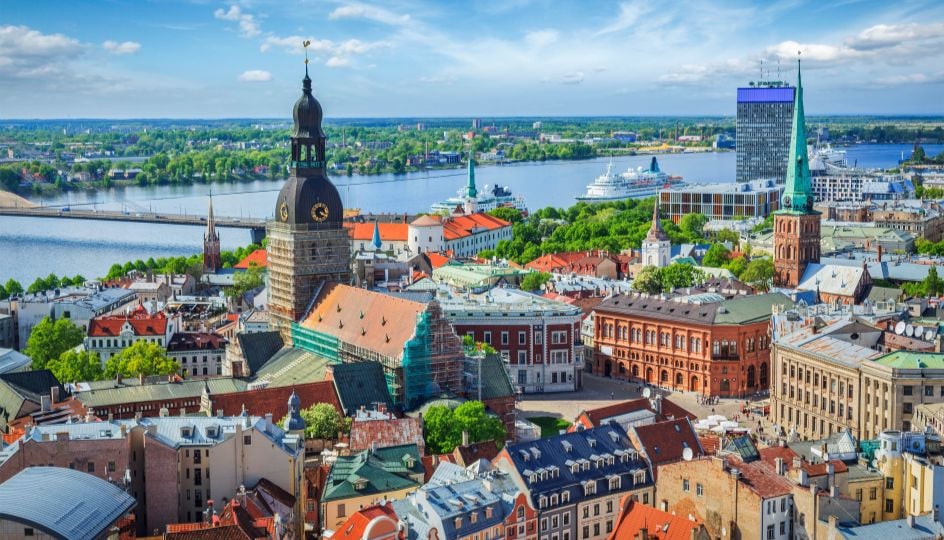
Latvia gives international businesses access to the European Union market, several company structures and defined routes for establishing a local presence.
However, companies entering the region need to plan for a range of incorporation, tax, employment, governance and reporting requirements.
Latvia, officially the Republic of Latvia, is the central country of the three Baltic states. It sits on the Baltic Sea and the Gulf of Riga, with Estonia to the north and Lithuania to the south. Its economy is largely driven by service industries, including transportation, information technology and financial services.
Latvia is a member of the European Union, the World Trade Organization (WTO), the Organisation for Economic Co-operation and Development (OECD), the North Atlantic Treaty Organization (NATO), the Council of Europe and the United Nations. For international businesses, these memberships place the country within established European and international trade frameworks.
The economy was projected to grow by 2.1% in 2025, 1.4% in 2026 and now 1.6% in 2027, supported by private consumption, investment and exports. Businesses considering Latvia should weigh this market context alongside the practical requirements for entity formation, tax, employment and ongoing compliance.
| Fast facts: |
|
Advantages of doing business in Latvia
Latvia combines its European Union membership with access to the European Union customs framework. Goods acquired from other member states are not subject to import duties, while goods imported from non-European Union countries follow the applicable customs duty treatment. Latvia also implements the European Union’s free trade agreements, which may reduce or remove duties for qualifying goods.
Foreign investors can choose from several legal forms, including limited liability and stock companies, partnerships, a sole trader, European companies and branches. This range allows groups to match their local presence to their capital, liability and governance needs.
Latvia has three special economic zones in Liepaja, Latgale and Rezekne and two free ports in Riga and Ventspils. Transactions within a free trade zone are exempt from tariffs and national taxes, alongside relaxed customs procedures for goods entering the zone. Businesses considering these locations should assess whether their planned activity fits the available customs and investment framework.
Choosing the right business structure in Latvia
For many international investors, a limited liability company, or Sabiedrība ar ierobežotu atbildību (SIA), provides a practical local entity. It is a separate legal entity with shareholder liability limited to capital contributions. A standard SIA requires a minimum equity capital of €2,800, contributed in cash or property, and its shares are not publicly traded.
A lower-capital SIA, known as a Mazkapitāla SIA, can be established with equity capital from €1 to €2,799. Only natural persons may act as founders or shareholders. The company may have no more than five founders or shareholders and its board members must also be shareholders. These restrictions make it more suitable for a small owner-managed business rather than a complex international group.
A stock company, or Akciju sabiedrība (AS), is a public limited liability company with a minimum share capital of €25,000. Its shares can be publicly traded. A European company requires €120,000 in share capital and can transfer its registration between European Union member countries, subject to the applicable European Union framework.
General and limited partnerships have no statutory minimum capital, but liability differs. General partners have unlimited liability. In a limited partnership, at least one general partner has unlimited liability and at least one limited partner is liable only up to their contribution. A sole trader conducts business as a registered natural person and must register when specified turnover, employment or activity conditions apply.
A foreign company may establish a branch that can carry out the same activities as its parent. The branch is not a separate legal entity, so the parent company remains liable for all obligations. This route may suit a business that wants a direct extension of its existing company rather than a separate Latvian subsidiary.
Starting a business in Latvia
Company formation in Latvia brings together documentation, banking and registration obligations. A limited liability company can be registered online with the Latvian Enterprise Register. All documents must be completed in Latvian and the company must register with the State Revenue Service for tax and, where applicable, value added tax purposes.
The main steps for establishing a limited liability company are:
- Prepare the memorandum and articles of association, shareholder register, management board member consents and ultimate beneficial owner disclosure
- Open a bank account, deposit the share capital and obtain confirmation from the bank
- Submit the application to the Commercial Register
- Register for value added tax with the State Revenue Service where applicable
Notary fees are approximately €100 but can vary. The state duty is €75 for standard processing or €225 for expedited processing, while value added tax registration carries no charge. Bank costs depend on the provider. The statutory review period is one to three business days, excluding the day of submission, but additional inspection may extend it. Banking, Latvian-language documents and any follow-up review can therefore influence a company’s launch timetable.
Corporate governance in Latvia
Every company needs a governance calendar after incorporation. An ordinary shareholder meeting must take place at least once per year to approve the annual statement, decide on profit distribution and elect an auditor. A limited liability company must give shareholders at least two weeks’ notice. A stock company must provide at least 21 days’ notice.
A limited liability company is governed by one or more natural persons with legal capacity and may establish a supervisory board of three to 20 members. A stock company uses a two-tier model with a management board and a supervisory board. The supervisory board has three to 20 members and is responsible for appointing and supervising the management board. A person cannot sit on both boards at the same time.
All Latvian companies must keep accounting records and file annual accounts and a tax return each year. Micro and small undertakings file annual financial statements within five months after the reporting year. Medium-sized, large and parent undertakings have seven months. Foreign company branches must also submit annual reports under Latvian law.
Audit requirements generally apply to large and medium-sized companies, listed small companies, dual companies, banks and insurance companies. Other businesses may also fall within audit requirements based on their size or legal status. Groups with subsidiaries may need consolidated annual financial statements when the relevant thresholds are met.
For small companies, an audit is required if, for two consecutive reporting years, at least two of the following thresholds are exceeded:
- Balance sheet total: €1 million
- Net turnover: €2 million
- Average number of employees: 50
For newly established companies, these thresholds are assessed at the end of the first reporting year. Finance and governance teams should align the close, approval, audit and filing stages before the year-end process begins.
The tax environment in Latvia
Latvia applies a standard corporate income tax rate of 20% of the tax base. Before applying the rate, the tax base is divided by 0.8, producing an effective rate of 25%. From 1 January 2026, corporate income taxpayers whose shareholders are exclusively natural persons may choose a 15% rate on distributed profits, alongside 6% personal income tax on the dividend income.
The standard value added tax rate is 21%. A reduced 12% rate applies to specified goods and services, including certain medical devices, domestic public transport, household heating, accommodation and some food products. A 5% rate applies to books and newspapers in physical or electronic form. Exemptions apply to specified activities, including education, financial, medical and insurance services.
Cross-border payments require attention to the recipient and the payment type. Dividends, interest, royalties and technical service fees paid to non-resident companies generally do not attract withholding tax, except where the recipient is in a low-tax jurisdiction. Consulting and management fees paid to a non-resident company are subject to 20% withholding tax unless a tax treaty reduces the rate. Latvia does not levy withholding tax on branch profits.
Credit institutions and consumer credit providers face additional sector-specific rules, including a 20% surcharge and solidarity contributions for Latvian credit institutions and Latvian branches of foreign credit institutions until the end of 2027. A company’s ownership, sector, payment flows and type of presence therefore influence its tax position.
Hiring and managing employees in Latvia
Latvia’s Labour Code governs employment contracts, wages, working time, rest, leave, termination and severance. Employment contracts are generally written and may be full-time, part-time, fixed-term or indefinite. A foreign-language contract also requires a Latvian-language copy. A probationary period may last up to three months, or up to six months where a collective agreement with a trade union permits it.
The normal working week is five days and no more than 40 hours. Employees must receive a break of at least 30 minutes no later than four hours after starting work, at least 12 consecutive hours of daily rest and weekly rest of at least 24 hours in addition to the daily rest period. Overtime is limited and work on a public holiday attracts a supplement of at least 100% of the hourly or daily wage rate.
Employees receive at least four weeks of paid annual leave. Latvia also has 13 statutory public holidays with additional substitute days applying in certain circumstances. The minimum gross monthly salary as of 2026 is €780. Salaries are paid at least twice per month unless the parties agree to monthly payments. These rules affect workforce scheduling, payroll configuration, absence planning and employment documentation.
Mandatory social security contributions apply to both employers and employees. For companies registered in Latvia, the European Union or European Economic Area, the employer rate is 23.59% and the employee rate is 10.50%. The 2026 maximum annual contribution base is €105,300 and the minimum annual base is €9,360.
European Union, European Economic Area and Swiss nationals do not require a work permit. Other foreign workers need a valid work permit and residence permit. As of 2025, employers recruiting foreign labour must work with the State Employment Agency before submitting immigration documentation. The European Union Blue Card is available to highly skilled non-European Union employees and is issued for two years, with a possible three-year extension. Recruitment teams should build these steps into their hiring and onboarding schedules.
Regulatory compliance in Latvia
Listed domestic companies must use International Financial Reporting Standards as adopted by the European Union in their consolidated financial statements. Financial institutions also operate within the Foreign Account Tax Compliance Act and Common Reporting Standard frameworks, which require specified account information to be identified and reported through Latvian authorities.
Latvia applies Base Erosion and Profit Shifting reporting and transfer pricing requirements. Country-by-country reporting applies to multinational enterprises with annual consolidated group revenue of at least €750 million in the previous year. Master and local file requirements apply where the relevant transaction thresholds are met. Digital platform reporting and cross-border arrangement reporting add further information-exchange obligations for businesses within scope.
Latvia’s anti-money laundering framework sits within the Law on the Prevention of Money Laundering and Terrorism and Proliferation Financing. Changes introduced in 2024 include licensing for crypto-asset service providers, customer due diligence for certain transfers involving self-hosted crypto-asset addresses and a €1,000 threshold for mandatory due diligence on occasional transactions. Businesses within scope need controls for customer information, reporting, employee eligibility and record-keeping.
FAQs
1. What is the most common company structure in Latvia?
Limited liability companies and stock companies are the structures most widely used by foreign investors. A standard limited liability company, or SIA, requires €2,800 in equity capital and limits shareholder liability to their contributions.
2. What is the minimum share capital for a Latvian SIA?
A standard SIA requires a minimum equity capital of €2,800. A Mazkapitāla SIA can have capital from €1 to €2,799 but is subject to restrictions on founders, shareholders and board membership.
3. What is the corporate income tax rate in Latvia?
The standard corporate income tax rate is 20% of the tax base. The tax base is divided by 0.8 before applying the rate, producing an effective rate of 25%.
4. What is the standard VAT rate in Latvia?
The standard value added tax rate is 21%. Reduced rates of 12% and 5% apply to specified goods and services.
5. Can a foreign company establish a branch in Latvia?
Yes. A Latvian branch can carry out the same activities as its parent, but it is not a separate legal entity. The foreign parent therefore remains liable for the branch’s obligations.
6. Do foreign workers need a permit in Latvia?
European Union, European Economic Area and Swiss nationals do not need a work permit. Workers from other countries need a valid work permit and residence permit to live and work in Latvia.
7. When must Latvian companies file annual financial statements?
Micro and small undertakings file within five months after the reporting year. Medium-sized, large and parent undertakings file within seven months.
Request our in-depth country profile to learn more about doing business in Latvia.
Request now Request now