Doing business in Lithuania
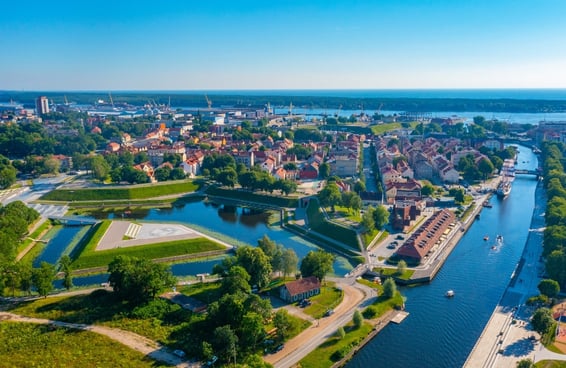
Lithuania offers international investors access to the European Union market, a range of legal structures and clear routes to establish a local presence.
However, businesses planning to operate in Lithuania must consider various company formation, tax, employment, governance and reporting requirements from the outset.
Lithuania, officially the Republic of Lithuania, is a parliamentary republic in the Baltic region of northern Europe. The country is divided into 10 counties, with Vilnius as both its capital and seat of government.
Lithuania is a member of the European Union, the eurozone, the Schengen Area, the Organisation for Economic Co-operation and Development (OECD), the World Bank, the International Monetary Fund (IMF) and the World Trade Organization (WTO). It is also party to international trade and investment agreements that support cross-border business and economic cooperation.
The IMF has projected economic growth of 2.8% for Lithuania in 2027, largely reflecting increased private consumption linked to withdrawals from the Pillar II pension. Growth is projected to converge at 2.5% in the medium term.
| Fast facts: |
|
Advantages of doing business in Lithuania
Lithuania combines its European Union membership with participation in the eurozone and Schengen Area. Its international trade and investment agreements support cross-border business, while European Union customs rules remove customs duties on goods traded between member states.
Foreign investors can choose from several forms of business representation. These include a private or public limited liability company, small partnership, sole proprietorship, partnership, European company, branch or representative office. The appropriate choice depends on the planned activities, capital, liability and governance model.
Lithuania offers foreign investors a network of seven free economic zones near Kaunas, Klaipėda, Šiauliai, Kėdainiai, Panevėžys, Akmenė and Marijampolė. These zones combine ready-to-build industrial sites with infrastructure, support services and tax incentives.
Companies investing or operating within the zones are exempt from corporate profit tax for their first 10 years of operation and pay 8% for the following six years. They are also exempt from tax on foreign company dividends and real estate, subject to applicable conditions.
Choosing the right business structure in Lithuania
Choosing a legal structure is one of the first decisions for a company entering Lithuania. The choice affects capital requirements, governance, liability and the way the business can raise finance.
For many international businesses, the private limited liability company, or Uždaroji akcinė bendrovė (UAB), offers a practical balance. Shareholder liability is limited to their contributions, while the minimum authorised share capital is €1,000. Shares cannot be offered publicly and the articles may restrict transfers, making the structure well-suited to privately owned operations.
Businesses planning a larger operation or seeking access to capital markets may prefer a public limited liability company, or Akcinė bendrovė (AB). This structure requires a minimum authorised share capital of €25,000 and can offer or list shares publicly, subject to securities and prospectus rules. Its more formal governance model makes it a better fit for organisations that need broader ownership or capital-raising options.
Entrepreneurs and small teams can consider a small partnership, which can have up to 10 members and has no minimum authorised capital. A sole proprietorship also has no capital requirement, although the owner assumes unlimited liability for the enterprise’s obligations, subject to statutory protections. These differences make the owner’s exposure to risk an important part of the decision.
General and limited partnerships provide further options for ventures involving at least two participants. Neither has a statutory minimum capital requirement, but liability differs. General partners bear unlimited liability, while a limited partner’s liability is capped at their contribution. Companies operating across European Union member states may also consider a European company, which requires minimum share capital of €120,000.
A foreign company that does not need a separate Lithuanian entity may open a branch. There is no minimum capital requirement, but the branch needs a Lithuanian registered address and a local legal representative. Because the branch remains part of the foreign parent, the parent carries full responsibility for its obligations. A representative office offers a more limited presence for marketing, promotion, information gathering or research. It cannot conduct commercial or production activities.
Starting a business in Lithuania
Company formation in Lithuania involves a sequence of legal, banking and registration steps. Limited liability companies, partnerships and branches must register with the State Enterprise Centre of Registers, or Valstybės įmonė Registrų centras. For a UAB, the process starts with the founding documents, a Lithuanian business address and the appointment of a general manager.
The main steps for establishing a private limited company are:
- Prepare the articles of association and the founding act or agreement, which requires a Lithuanian business address and a general manager
- Reserve a temporary company name for approximately €16, which lasts six months
- Open an accumulative bank account and transfer the required share capital
- Notarise the founding documents, which normally takes one to two days and costs anywhere between €85 and €338
- Register the company in the Register of Legal Entities, which requires an indicative period of three days and costs approximately €32
- Convert the accumulative bank account into a settlement account, which normally takes two to seven days depending on the bank
Banking and document certification can influence the incorporation timetable. Each co-founder must transfer at least 25% of their share value to the accumulative account, with the balance due within 12 months. Founding documents normally require notarisation, while documents from countries that have joined the 1961 Hague Convention require an Apostille. Businesses should account for these dependencies when planning their launch date.
Corporate governance in Lithuania
Corporate governance responsibilities continue after incorporation. Both ABs and UABs must hold an ordinary shareholders’ meeting at least once per year and no later than four months after the financial year-end. This meeting provides the formal point for approving the annual financial statements, deciding key appointments and how to distribute profit or loss. Shareholders must receive at least 21 days’ notice, requiring companies to maintain a clear annual governance calendar.
The level of governance depends on the entity. An AB must have a management board and may add a supervisory board. Each board must have at least three members. A UAB has more flexibility and may operate with a sole manager or combine a manager with a management board. It can also choose whether to establish a supervisory board. International groups should align this local model with their wider decision-making and oversight arrangements.
Only natural persons with legal capacity can serve as board members. The same person cannot sit on both the management board and supervisory board of one company. Terms are set in the articles of association and cannot exceed four years, making appointment tracking an important part of entity management.
Every Lithuanian company must maintain accounting records and prepare annual financial statements for approval and submission to the Register of Legal Entities. The timetable varies by structure. Private and public limited companies have four months after the financial year-end to approve their accounts, while small partnerships and sole proprietorships have three months. Finance and governance teams therefore need to coordinate the close, approval and filing processes from the outset.
Audit requirements can add another stage to the annual cycle. They apply to public interest entities, state and municipal enterprises, joint-stock companies, private limited liability companies, companies preparing consolidated statements and entities receiving more than €500,000 in public funding during a financial year. Businesses should establish whether an audit applies before setting their reporting timetable.
The tax environment in Lithuania
Lithuania applies a standard corporate income tax rate of 17% and does not levy a separate local or municipal corporate income tax. The position can differ for smaller businesses and particular sectors. Qualifying small and agricultural companies may access rates of 0% or 7%, while newly established small entities with annual revenue up to €300,000 may apply a 0% rate for their first two tax periods and 7% thereafter. Banks and credit unions face a 21% rate on taxable profits above €2 million. These variations make the size, sector and stage of the investment relevant to tax planning.
The standard value added tax rate is 21%, but the rate depends on the goods or services supplied. A 12% rate applies to areas including regular passenger transport, accommodation and admission to certain artistic and cultural institutions or events. A 5% rate covers specified medicine, medical aid, newspapers, periodicals, books and other publications. Businesses should map their activities to the correct treatment before invoicing begins.
A small-business relief may apply where receipts did not exceed €45,000 in the previous calendar year and are not expected to cross that threshold in the current year. As turnover grows, monitoring the threshold becomes important for registration, pricing and cash-flow planning.
Cross-border funding and profit repatriation can create withholding tax obligations. Dividends are generally taxed at 17% from 2026, while interest and royalties paid to non-residents are generally taxed at 10%. A treaty or domestic concession may reduce or remove the charge and qualifying dividends may also be exempt. Lithuania does not impose a branch remittance tax. Groups should review the ownership and payment structure before moving funds across borders.
Hiring and managing employees in Lithuania
Companies building a workforce in Lithuania enter a regulated employment environment. The Labour Code covers employment contracts, working time, rest, pay, termination and employee rights, while separate legislation addresses trade unions, equal opportunities and occupational safety and health. These rules affect hiring plans, employment documentation and payroll administration from the first employee onwards.
Although an employment contract may be written or oral, a written agreement gives both parties a clearer record of the terms and is often required for legal certainty. Employers may generally use a probationary period of up to three months and this period cannot simply be extended by agreement between the parties.
From 1 November 2026, new rules will allow a longer probationary period for certain higher-paid employees. Where an employee’s monthly salary is at least twice the average monthly salary (VDU), employers may agree on a probationary period of up to six months. The change is intended to give employers more time to assess the suitability of highly qualified employees and reduce the risk of hiring decisions being made within a shorter assessment period. Employee protections will continue to apply and the probationary period cannot be extended at the discretion of the parties.
For companies hiring in Lithuania, particularly for senior or highly qualified positions, the change should be taken into account when preparing employment contracts, recruitment processes and onboarding arrangements from November 2026 onwards.
The standard working week is 40 hours. Employees must receive at least 11 consecutive hours of daily rest and a break of at least 30 minutes after no more than five hours of work. Average weekly working time, including overtime, cannot exceed 48 hours. Workforce scheduling therefore needs to account for both operating demand and statutory rest limits.
Paid annual leave starts at 20 working days for a five-day week or 24 working days for a six-day week. Lithuania also has 14 public holidays. Employers should factor these entitlements into resourcing, payroll and absence planning.
As of 1 January 2026, the minimum hourly wage is €7.05 and the minimum monthly wage is €1,153. Overtime normally attracts at least 1.5 times the usual wage, with higher rates for work at night, on rest days or on public holidays. Payroll configuration must reflect these different pay treatments.
Mandatory social insurance covers health, pensions, unemployment and workplace accidents. In 2026, total contributions are 1.47% for the employer and 19.5% for the employee, with the employee share withheld through payroll. Employer rates can vary for fixed-term contracts and according to occupational risk, so the total employment cost depends partly on the contract and role.
International recruitment requires additional planning. Nationals from outside the European Union, European Economic Area and Switzerland generally need a work permit or labour market needs decision as well as a Lithuanian temporary residence permit. A Schengen visa for a short business or tourist visit does not provide the right to work.
Foreign nationals must generally receive a full-time contract lasting at least six months. Highly qualified non-European Union nationals may qualify for a European Union Blue Card where the monthly salary is at least 1.2 times the average gross wage. Employers should consider immigration requirements early as they affect recruitment timing and the terms of the offer.
Regulatory compliance in Lithuania
Lithuania uses International Financial Reporting Standards, International Accounting Standards and Business Accounting Standards. Companies need to identify the framework that applies to their entity and reporting obligations. Domestic companies with securities traded on a regulated Lithuanian market must use International Financial Reporting Standards as adopted by the European Union for consolidated financial statements.
Financial institutions operating in Lithuania also work within international information-exchange regimes. Under Lithuania’s Model 1 Foreign Account Tax Compliance Act agreement with the United States, they identify and report relevant United States account information to the State Tax Inspectorate, which passes it to the United States Internal Revenue Service.
The Common Reporting Standard adds an annual reporting requirement for information on financial accounts held by non-residents. These obligations make customer classification, account data and reporting controls central to the compliance model of affected institutions.
Lithuania’s anti-money laundering framework is based on the Law on the Prevention of Money Laundering and Terrorist Financing, in force since 1 January 1998. The law brings European Union requirements, including those connected with the fifth and sixth Anti-Money Laundering Directives, into the national framework. Businesses within scope should build the relevant checks and reporting responsibilities into their operating processes rather than treating them as a one-off registration task.
FAQs
1. What is a UAB in Lithuania?
A UAB is a Lithuanian private limited liability company. Shareholder liability is limited to their contributions. It requires minimum authorised share capital of €1,000 and cannot offer shares to the public.
2. What is the corporate income tax rate in Lithuania?
The standard corporate income tax rate is 17%. Reduced rates may apply to qualifying small and agricultural companies. Banks and credit unions pay 21% on taxable profits above €2m.
3. What is the VAT rate in Lithuania?
The standard value added tax rate is 21%. Reduced rates of 12% and 5% apply to specified goods and services.
4. Can a foreign company open a branch in Lithuania?
Yes. A branch is not a separate legal entity and the foreign parent bears full liability for its obligations. It needs a Lithuanian registered address and local legal representative.
5. Do foreign employees need a work permit in Lithuania?
Workers from outside the European Union, European Economic Area and Switzerland generally need a work permit or labour market needs decision and a Lithuanian temporary residence permit. Our Lithuania country profile (see below) lists exceptions for specified groups.
6. When must Lithuanian companies approve annual accounts?
Private and public limited companies must approve annual accounts within four months of the financial year-end. Small partnerships and sole proprietorships have three months.
Request our in-depth country profile to learn more about doing business in Lithuania.
Request now Request now